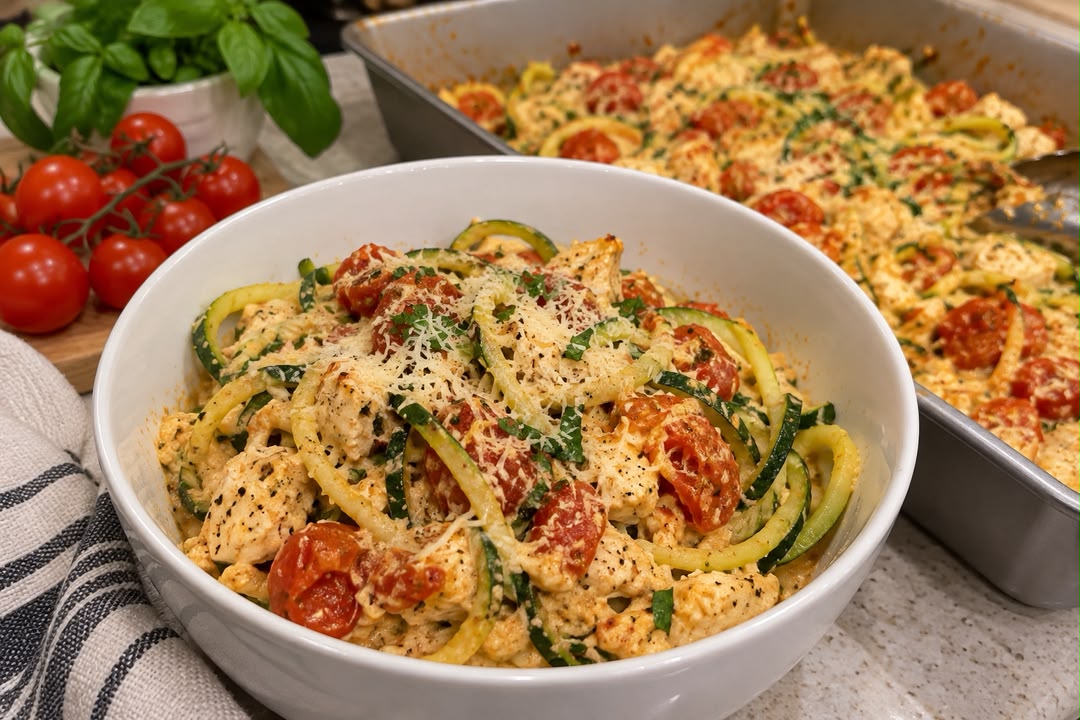
Diabetic-Friendly Baked Feta Pasta (Zucchini Noodle Version)
If you’ve seen the viral baked feta pasta all over the internet, you know exactly how good it looks. But between the pasta and all that oil, it’s not exactly something I could serve at my table without a second thought. So I turned it into a diabetic-friendly lunch instead, and in my opinion, this version is even better. It’s high protein, low carb, and perfect for meal prep or leftovers throughout the week. Let me show you how I made it.
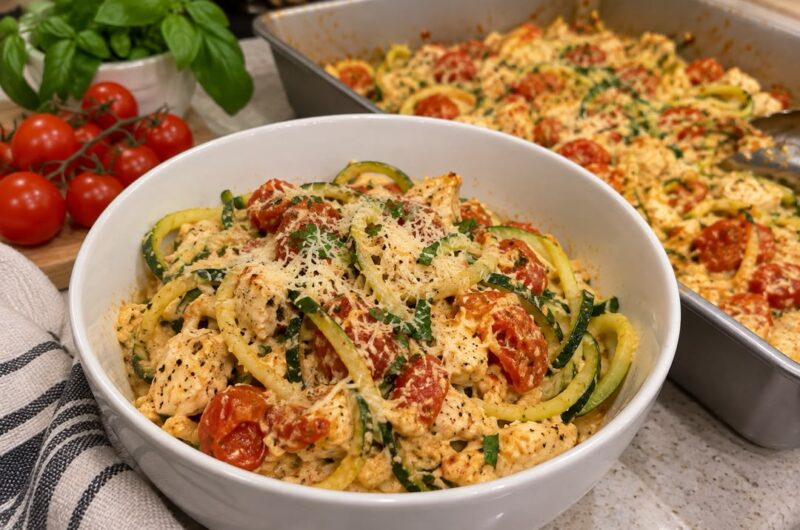
Diabetic-Friendly Baked Feta Pasta (Zucchini Noodle Version)
4
servings15
minutes40
minutesIngredients
2 containers cherry tomatoes
1 (8-ounce) block feta cheese
4 tablespoons olive oil
6 cloves garlic, minced or left whole
Black pepper, to taste
Red pepper flakes, to taste (optional)
Italian seasoning, to taste
2 cooked chicken breasts, chopped
2 zucchinis, julienned
Directions
- Prep the tomatoes and feta: Spread both containers of cherry tomatoes evenly across a baking dish. Place the block of feta cheese right in the center.
- Add the oil and garlic: Drizzle everything with the olive oil, then scatter the garlic cloves over the top, minced or whole, whichever you prefer.
- Season it: Skip the salt here, since the feta already brings plenty. Add black pepper, red pepper flakes if you like a little heat, and Italian seasoning. Season to your taste.
- Bake: Place the dish in the oven and bake at 400°F for about 35 minutes.
- Smash and mix: As soon as it comes out of the oven, use a potato masher or a meat masher to smash everything together right in the dish, turning the tomatoes and feta into a creamy sauce. Be careful, the tomatoes are hot and may burst as you smash them.
- Add the chicken: Stir the cooked chicken breast right into the same baking dish, mixing it in with the creamy sauce.
- Add the zucchini noodles: Stir in the julienned zucchini. Pop the dish back into the turned-off oven for an extra 5 minutes, letting the residual heat soften the zucchini without overcooking it.
Why This Recipe Works
The magic of the original baked feta pasta was always in that creamy, roasted tomato and feta sauce, and that part doesn’t change here. What does change is the base. Swapping pasta for zucchini noodles cuts the carbs significantly while keeping all that comforting, saucy texture you’re craving. Adding chicken breast also turns this from a side dish into a full, protein-packed lunch that will actually keep you full, which matters a lot for stable blood sugar throughout the day.
Tips for Success
- Don’t boil the zucchini. Letting it soften in the residual oven heat instead of boiling keeps it from turning watery or mushy.
- Use rotisserie chicken for an even faster version. If you’re short on time, shredded rotisserie chicken works just as well as baking your own.
- Season to taste. Since the feta brings a good amount of saltiness on its own, taste before adding any extra salt.
- Smash carefully. The tomatoes come out of the oven very hot and can burst as you mash them, so take your time here.
Storage and Reheating
This dish stores well in the refrigerator for up to 4 days in an airtight container, which makes it a great meal-prep option. Reheat gently in the microwave or on the stovetop over low heat. The zucchini will soften slightly more as it sits, but the flavor holds up beautifully as leftovers.
Frequently Asked Questions
Can I use regular pasta instead of zucchini?
Yes, if you’d prefer the more traditional version, regular pasta works the same way here. Just know that swapping in zucchini is what keeps this recipe lower in carbs.
What other vegetables could I use instead of zucchini?
Spiralized yellow squash or even julienned bell peppers would work well as a substitute if you want to switch things up.
Can I make this ahead of time?
The tomato-feta base can be baked and smashed ahead of time, then stored separately from the zucchini. Add the zucchini fresh when you’re ready to reheat and serve, to keep the best texture.
A Note on Diabetic-Friendly Eating
This dish is a high-protein, lower-carb take on a popular comfort food, designed to help support more stable blood sugar levels as part of a balanced diet. As always, if you’re managing diabetes, check with your doctor or dietitian about how this fits into your personal meal plan.